Field Notes
Kale, Lyme, and Leaf Miners: What Ten Days Away Taught Me About Observation
A rough couple of weeks
It's been an adventure with my kale lately. Partly because I wasn't seeing the growth I expected — and partly because I was sick as a dog for a few weeks. What we think was Lyme Disease really put me through the ringer. I'm doing much better now, thankfully. But being unable to tend to my crops for close to ten days was a tough pill to swallow (pun intended).
This is a story in two parts, separated by those ten days I wasn't in the garden. Both ended up teaching me the same lesson from opposite directions.
Part one: the leggy seedlings
A couple of weeks ago, before the symptoms started, I noticed some of my kale seedlings were looking way too leggy and crowded. The thin stems were really struggling under the weight of those broad leaves, and they clearly weren't getting as much light as they needed. After staring at them for a bit and consulting my garden advisor, I came to the conclusion it was time to thin them out.
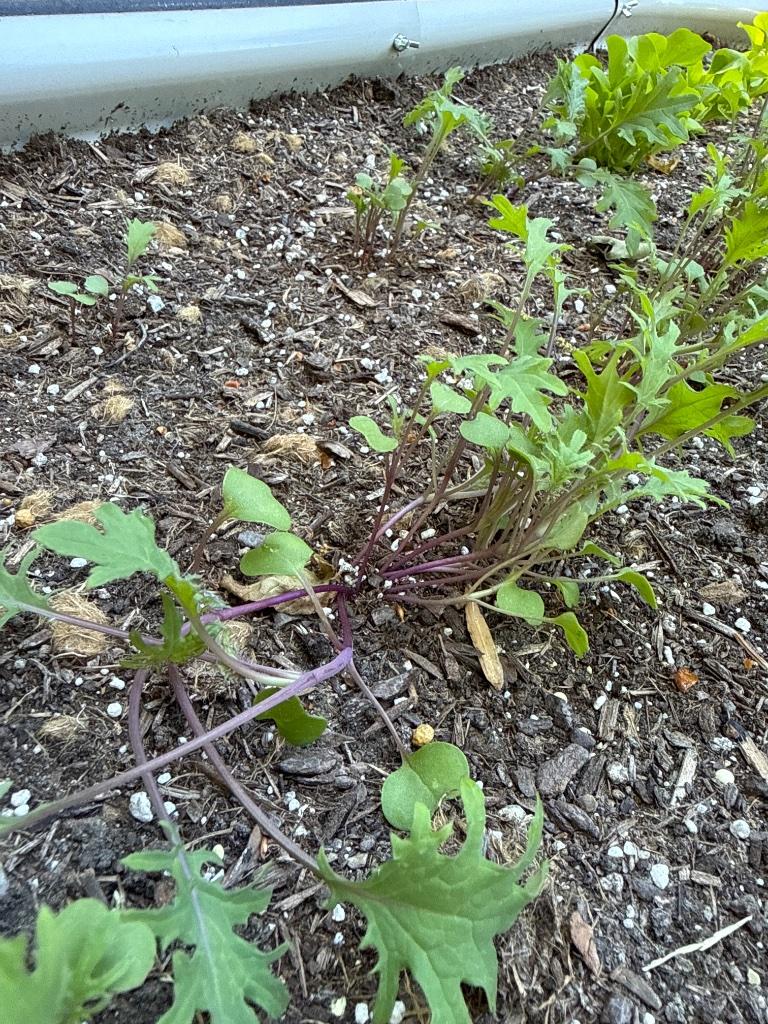
I pulled some of the seedlings from the center cluster to give the remaining ones a fighting chance. Then I built up mounds of soil — pyramid-style — around the remaining plants to help support those thin stalks holding up disproportionately big leaves.
Then I got sick. And for ten days, the garden was on its own.
When I finally made it back out, I braced myself. To my surprise, the kale was looking healthy. Stronger stalks. Growing vertical. Starting to look like it was going to make it. I also noticed some insect activity — but I'll come back to that.
Lesson from part one
Thinning out overcrowded seedlings isn't just about making space — it's about giving those spindly plants a real shot at the light and nutrients they need. With kale, the breathing room paid off in stronger, more robust growth. It's all about finding that balance right from the start.
Part two: the streaks
While checking on the recovering kale a few days later, I noticed peculiar, streaky white and yellow lines snaking across the leaves. I admit, I was pretty clueless. Was this a new strain of artistry, or a warning sign?
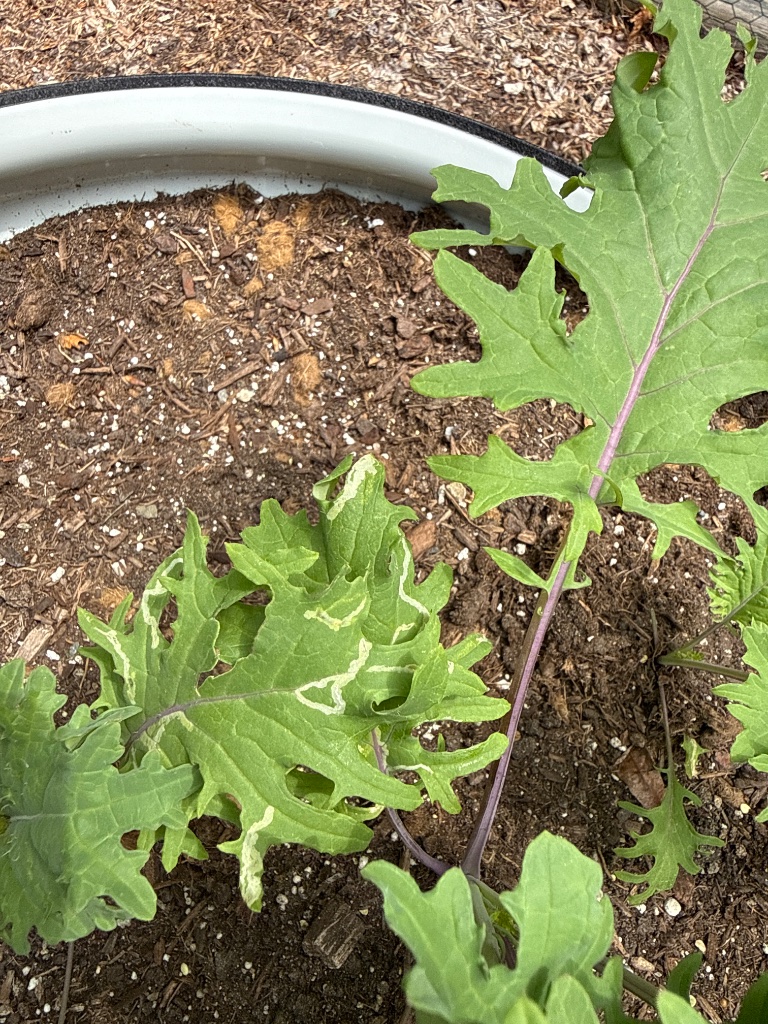
I consulted my garden advisor and went through a few possibilities before landing on the theory of leaf miners. These are little larvae laid on the underside of the leaf. When they hatch, they burrow into the leaf and feed between the surfaces, leaving behind those telltale squiggles.
I flipped a few leaves to inspect the undersides, half-expecting an entomological rave. Sure enough — tiny white specks. Egg sacs.
Instead of reaching for a pesticide (I don't want to introduce that into my food supply), my advisor's suggestion was simpler: squash the eggs between my fingers. Since they hadn't hatched yet, killing the eggs prevents the next wave from tunneling into the leaves.
I'm on alert now and checking daily for more, because I only killed the eggs — not the adults. And let's be frank: reproduction is the goal of every living species. Fortunately, neither the miners nor the eggs are a threat to enjoying the kale itself in a nice summer salad. The real concern is preventing them from destroying the crop before I can make that salad.
Lesson from part two
Assuming isn't gardening. The kale and its critters taught me firsthand that observation is more than skin deep. Sometimes the answers are hiding just under a leaf, waiting for a nudge to reveal themselves. But if you don't know what you're looking at, it's hard to uncover the revelation.
Observations without knowledge are still useful — over time, you build pattern recognition. But when you need to address an issue, correct action is critical — and that's where access to the right knowledge matters most.
What I'm taking from both stories
Two close calls in one raised bed, separated by ten days I couldn't be present for:
- Thinning the leggy seedlings looked harsh in the moment. It saved them.
- The leaf-miner streaks looked like cosmetic damage. They were a generation of pests about to multiply.
In both cases, the right move only became obvious once I stopped guessing and asked someone — or something — that actually knew. The plants don't owe me their lessons. I have to go looking, and I have to know what I'm looking at.
That's the part of gardening I keep coming back to: presence and knowledge, working together. Either one alone leaves you guessing.
Frequently Asked Questions
As soon as the seedlings have two true leaves and are clearly crowding each other — usually 2-3 weeks after germination. If stems look leggy and leaves are flopping under their own weight, you're already overdue.
Aim for 12-18 inches between plants for full-size heads, or 6 inches if you plan to harvest as baby greens. When in doubt, give them more room than feels right — kale gets bigger than first-timers expect.
Sometimes. Kale seedlings transplant reasonably well if you lift them gently with roots intact, water them in immediately, and shade them for a day or two. But the safer move is to snip the unwanted seedlings at soil level rather than pulling — that protects the roots of the ones you're keeping.
Squiggly, pale white or yellow lines that wander across the surface of a leaf — almost like someone drew on it with a thin highlighter. The trails get wider as the larva grows. The damage is *inside* the leaf, between the upper and lower surfaces, so you can't wipe it off.
Flip the leaves over and look at the undersides, especially near the veins. The eggs are tiny white specks, often laid in small clusters. A magnifying glass helps if your eyes are like mine.
Yes. The larvae stay inside the leaf and don't affect the rest of the plant. Trim off the damaged sections, wash the rest well, and the kale is safe to eat. The bigger concern is stopping the population before it destroys the crop.
Crush the egg clusters on the underside of leaves between your fingers before they hatch. Remove and destroy any already-mined leaves so the larvae inside don't mature. Floating row covers prevent the adult flies from laying eggs in the first place — the most reliable long-term fix.