Field Notes
Why Lettuce Bolts in Summer (And How to Slow It Down)
Lettuce doesn't die in summer — it quits. The moment it senses heat and long days, it stops making leaves and starts making seeds. That process is called bolting, and once it starts, your harvest window closes fast.
If you're growing lettuce for the first time and wondering why your plants suddenly look tall, bitter, and not at all like what you were expecting, this is probably what happened. Here's what's actually going on and what you can do about it — including what worked for me growing Buttercrunch in Zone 6b Connecticut.
What Bolting Actually Is
Bolting is a plant's survival response, not a failure. When lettuce detects a combination of rising soil temperature, air temperature, and longer days, it interprets that as a signal that summer is here and it needs to reproduce before conditions get worse. The plant shifts all its energy from producing leaves to producing a flower stalk and eventually seeds.
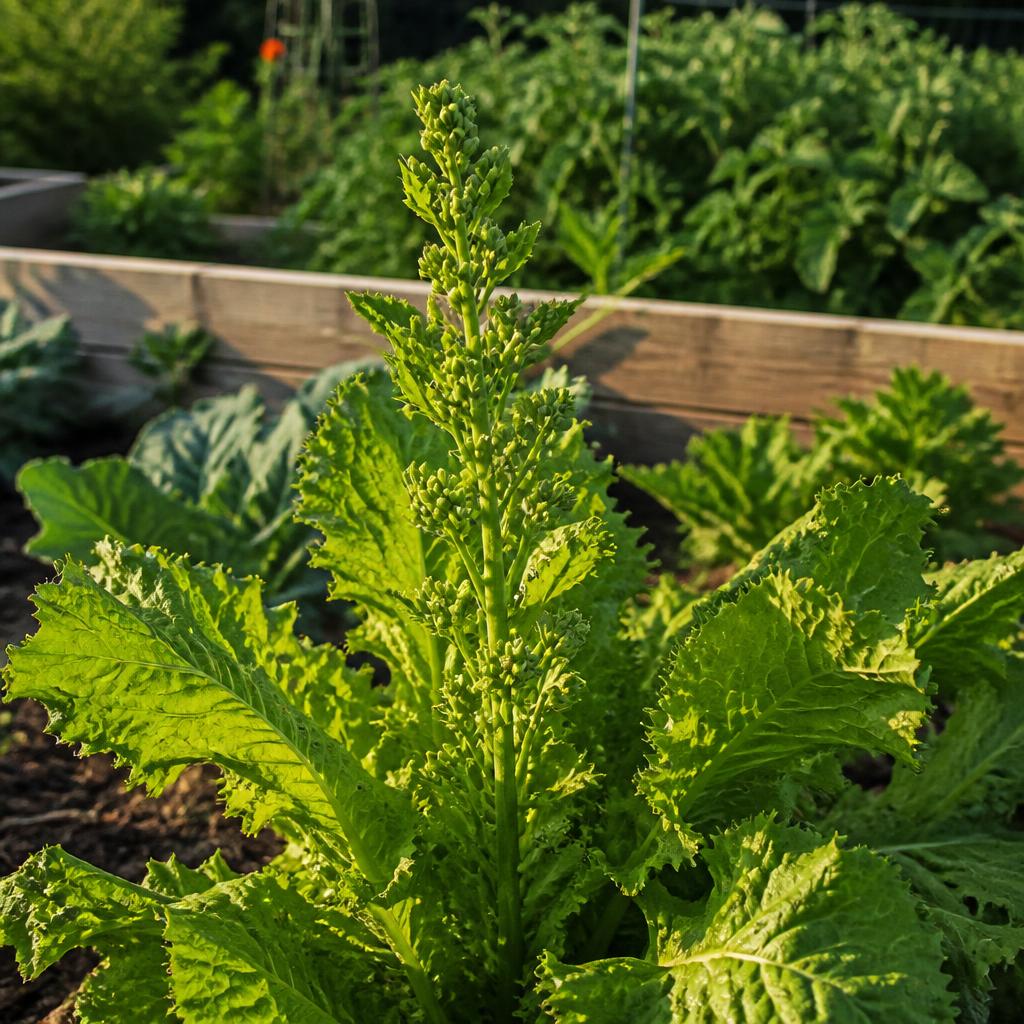
The sequence happens fast:
- The center of the plant elongates — the crown pushes upward instead of outward
- Leaves get smaller, more pointed, and increasingly bitter
- A tall central stalk appears, often within days of the first signs
- Flowers open and the plant goes to seed
Once you see that central stalk, you haven't missed your window entirely — but you're close. The leaves are already getting bitter. If the stalk has flowered, the window is closed.
What Triggers It in Zone 6b
In Ridgefield, Connecticut and similar Zone 6b climates, lettuce bolting typically accelerates in late June through July as soil temperatures consistently exceed 70–75°F (21–24°C) and day length peaks around the summer solstice. Both triggers work together — heat alone will do it, and long days alone will do it, but the combination accelerates the process significantly.
I sowed Buttercrunch on May 8th this year. By late June — day 52 — I was still harvesting full outer leaves. I got two substantial harvests (the second one filled three gallon Ziploc bags) without the plants bolting. That's not luck; it's partly variety choice and partly timing.
The key factors that worked in my favor:
- Buttercrunch is a heat-tolerant variety. Looseleaf and butterhead types generally resist bolting longer than romaine or crisphead. Buttercrunch specifically was bred for this.
- I started harvesting early. First outer leaves came off June 22nd — before the plant could redirect all that energy into flowering.
- The bed had some afternoon shade. Bed 3 gets 4–5 hours of direct sun. For lettuce, that's actually a feature in summer, not a bug.
How to Spot Bolting Before It's Too Late
You don't need to be a plant expert. Look for these signals:
Early warning — act now:
- The center of the plant is taller than the outer leaves and looks like it's reaching upward
- Leaves at the center are smaller and more elongated than outer leaves
- Bitterness shows up when you taste a leaf — noticeable but not overwhelming
Late stage — harvest what you can:
- A clear central stalk is visible above the leaf canopy
- Leaves have a sharp, unpleasant bitterness
- Stalk is 6+ inches tall
Too late — the plant has moved on:
- Flowers are open or visible
- Stalk has branched into multiple flowering heads
At the late stage, harvest the outer leaves immediately and eat them that day — they'll be bitter but edible if used in a mix. Once flowers open, the plant isn't worth continuing to harvest.
How to Slow Bolting Down
You can't stop bolting permanently. You can delay it by several weeks with the right moves.
Choose the right variety. If you haven't sowed yet: Buttercrunch, Black Seeded Simpson, Oakleaf, and Salanova types all have meaningfully better bolt resistance than iceberg or romaine. This is the highest-leverage decision you make.
Time your sowing for a fall harvest. In Zone 6b, sowing lettuce in late July to early August targets a September–October harvest when temperatures are dropping, not rising. Fall lettuce doesn't bolt. Many first-season growers don't know this — they assume lettuce is a spring-to-summer crop. It's actually a cool-season crop that thrives in fall.
Provide afternoon shade. Lettuce tolerates partial shade better than most vegetables. In summer, a spot that gets morning sun and afternoon shade will bolt significantly later than full-sun exposure. A shade cloth (30–40% block) over an existing bed accomplishes the same thing.
Keep soil temperature down. Mulch around plants to insulate the soil from heat. This matters more than air temperature — it's soil warmth that triggers the root signal to bolt. Two to three inches of straw or shredded leaves makes a real difference.
Harvest continuously. Cut-and-come-again harvesting — removing outer leaves weekly rather than pulling whole plants — keeps the plant in a productive cycle longer. A plant that's being regularly harvested stays in leaf mode longer than one that's left untouched.
What to Do If It's Already Bolting
If the center stalk is visible but flowers haven't opened yet:
- Harvest all remaining leaves immediately — they'll be usable for a few more days
- You can try pinching off the central stalk to buy another week, but the plant will usually find another way to bolt
- Don't pull the plant yet — the outer leaves may still be palatable in salad mixes
If flowers are already open, pull the plant. Use the space for a succession sow or a fall crop. If you're keeping a garden journal, log the sow date and bolt date — next year that pair of dates tells you exactly when to start your succession.
Frequently Asked Questions
Lettuce begins bolting when soil temperatures consistently reach 70–75°F (21–24°C) and air temperatures exceed 75–80°F regularly. In Zone 6b climates like Connecticut, this typically means late June through August.
Yes, but with caveats. Leaves harvested before the flower stalk opens are edible but increasingly bitter. Once flowers open, the bitterness becomes pronounced. Bolted leaves can still work cooked, wilted into dishes, or as a small component in a strongly dressed salad.
The clearest early sign is the center of the plant elongating and growing taller than the outer leaves. If the plant's silhouette has shifted from a flat rosette to a more upward, columnar shape, bolting has started. Tasting a center leaf and noticing bitterness confirms it.
No variety is bolt-proof, but looseleaf and butterhead types like Buttercrunch, Black Seeded Simpson, and Oakleaf bolt significantly later than crisphead types. For summer growing in Zone 6b, Buttercrunch is a reliable first choice.
If you want to save seed for next season, yes — let one or two plants complete the cycle. The seeds are viable and easy to collect once the flower heads dry out. For everything else, the goal is to harvest before the plant gets there.