AI Gardening Methods
Why ChatGPT Isn't Enough for Gardening (And What I Use Instead)
ChatGPT gives accurate gardening advice. It just doesn't know your garden — and in practice, that distinction is the difference between a plant that survives and one that doesn't.
I'm a second-year gardener in Zone 6b Connecticut managing close to 30 different plant types across roughly 10 beds at three different locations on my property, each with different sun exposure, different soil conditions, and different microclimates. I use AI to help me manage all of it. Just not ChatGPT. Here's why, and what three real situations this season showed me about the gap.
What General AI Gets Right (And Where It Stops)
Ask ChatGPT "why are my kale leaves turning yellow?" and you'll get a competent answer. It'll walk you through nitrogen deficiency, overwatering, pH imbalance, and a handful of other common causes. The information is accurate. The advice is reasonable.
It's also the same answer it gives everyone, everywhere, regardless of what's actually happening in your garden.
General AI tools don't know what you planted, when you planted it, or what your soil has been doing all season. They don't know it rained heavily in your area three days ago, or that you're in Zone 6b Connecticut where caterpillar pressure peaks in July, or that your kale is 47 days old and was already stressed by waterlogging in May. They can't see the photo you took this morning. They have no memory of what you asked last week.
The result is advice calibrated to an average garden in average conditions. Your garden isn't average. No garden is.
Three Situations Where the Difference Mattered
The Caterpillar Diagnosis
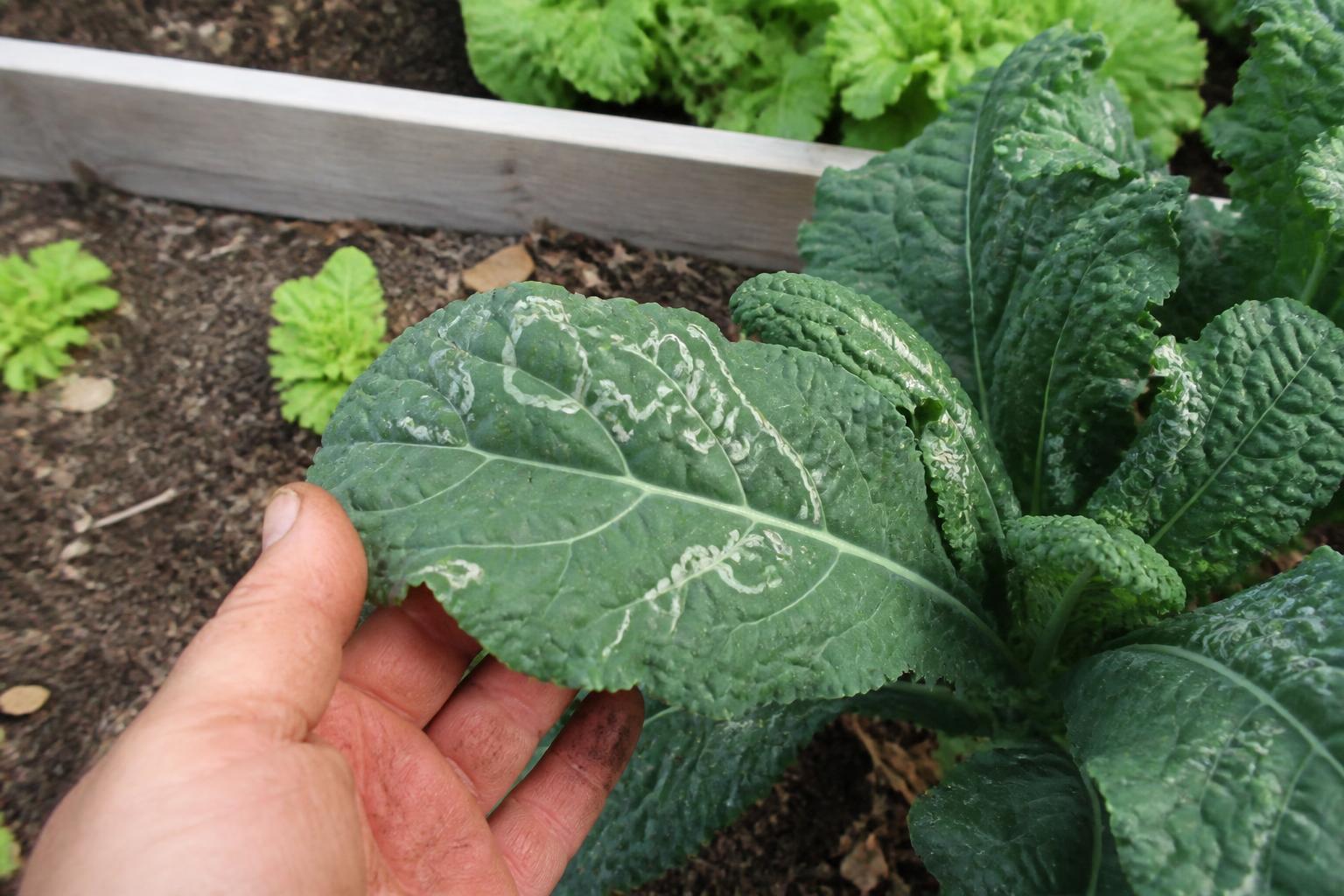
In mid-summer I noticed small holes in my kale leaves. Disease? Nutrient deficiency? Something I did wrong?
I took photos and ran them through GrowLog AI with a basic description of what I was seeing. It didn't just hand me an answer. It worked through the possibilities: was this a disease? Fungal infections and bacterial issues leave different marks — discoloration, spots, lesions, often without clean edges. These holes had clean edges. Disease was unlikely. Was it a pest? If so, what kind? Sucking insects like aphids and spider mites leave stippling and yellowing, not holes. Chewing insects leave holes. The size and pattern of the damage pointed toward caterpillars rather than beetles, and the timing confirmed it: we'd just had heavy rains, and caterpillar activity in the Northeast peaks in exactly these conditions in mid-summer. It told me to check the undersides of the leaves.
I did. Found the caterpillar. Squashed it. The app then recommended BT (Bacillus thuringiensis), a natural bacterial treatment that targets caterpillars specifically, applied to the whole plant to prevent more from establishing.
Plant saved. About 10 minutes from photo to corrective action.
Ask ChatGPT "why does my kale have small holes?" and you'll get a list of possible causes. You might eventually land on caterpillars. You won't get the seasonal timing context for your specific region, the connection to the recent heavy rain, or a treatment recommendation based on what's actually in your beds right now. You'll get a starting point for a search, not an answer.
Succession Planting After Harvest
After pulling my first-round crops, I needed to figure out what to plant next and how to manage a set of transplants (tomatoes, broccoli, new kale varieties, eggplant) showing early stress as they went into the ground in high summer.
GrowLog knew what had already been in each bed. It knew the soil conditions I'd been managing all season: the pH situation, the waterlogging, the amendments. It made succession recommendations based on what each bed had just been through. When the transplants showed stress, it helped me diagnose early pest issues and typical late-summer disease pressure, and walked me through corrective steps before those problems had a chance to establish.
Those plants are now healthy and producing.
ChatGPT could give me a generic succession planting guide. It could explain what individual pests look like and how to treat them. It can't connect any of that to the history of my specific beds, the specific plants going in, or mid-July conditions in Zone 6b. Without that context, the advice is general. General advice doesn't save specific plants.
The SunPatiens Diagnosis
My SunPatiens Compact 'Electric Orange' — a hybrid impatiens — started showing dark stress rapidly. Leaves turning black and brown, spreading quickly.
GrowLog walked me through the likely cause given current conditions: high humidity, inadequate airflow, plant debris accumulating at the base and creating a disease reservoir. The corrective action was specific: remove the affected leaves, clear the plant waste at the base, open up the canopy for better air circulation.
I followed it. The plants stabilized.
Not complicated in retrospect. But a new gardener looking at blackening leaves on an ornamental plant, with no experience and no context about humidity-driven disease pressure in Northeast summers, would likely either wait too long or water more, assuming drought stress. By the time the actual cause became obvious, the plant is gone.
The Actual Gap: Memory and Context
The issue isn't that GrowLog AI has better gardening knowledge than ChatGPT. Large general AI models know an enormous amount about plants.
The gap is memory. GrowLog knows my garden. It knows what I've planted, what I've logged, what my soil has been doing, what pests and diseases have shown up before, and what time of year it is in my specific region. When I report a new symptom, it diagnoses against that history, not against a generalized model of what gardens typically do.
That's the difference between asking a knowledgeable stranger for advice and asking someone who has been watching your garden with you all season.
For simple one-off questions, ChatGPT works fine. "What's the best way to store kale?" You'll get a good answer. But for diagnosis, timing, and treatment decisions that depend on what your garden has been through, general AI works without the information it needs. A confident answer built on incomplete context isn't better than no answer. In gardening, it's often worse.
When You're Managing More Beds Than You Can Keep in Your Head
I'm managing close to 30 different plant types across roughly 10 beds at three different locations on my property. Each location has different sun exposure. Each bed has its own soil history. Different crops are at different stages simultaneously.
Getting useful, specific advice from a general AI across that kind of system would require re-explaining the full context every time you asked a question: the pH situation in Bed 3, what went into Bed 1 last month, what the weather has been doing, what symptoms you saw last week on the kale versus this week on the eggplant.
Nobody does that. So you ask the stripped-down version of the question, get a generic answer, and make a decision with partial information.
A tool that accumulates context over a full season and remembers what you told it in May when you're asking something in August is a different kind of resource entirely. That's what I've been building with GrowLog AI this year. It's why I don't need to call a gardening center, post to a forum, or run a web search every time something looks off. The context is already there.
That matters more than it sounds. I'm also building a product and company, running a marketing consulting practice, and trying to actually be present with my family. I don't have two hours to research why my eggplant looks off. I have ten minutes. What GrowLog gives me isn't just better answers — it's the ability to manage 10 beds across three locations without keeping all of it in my head. A new gardener with one raised bed can move from confused to competent in a single season. Someone like me can run a garden that would have taken years of experience to manage, from year two. That's the real jump: not from one bed to five, but from one season of guessing to actually knowing what you're doing.
What I'd Tell a New Gardener
In your first or second season, you'll encounter things you don't recognize. Discoloration, holes, wilting, stunted growth, spots, mold. Most new gardeners either ignore these until it's too late or misdiagnose them and apply the wrong fix.
The advantage I've had this season isn't gardening knowledge. A year ago I had almost none. It's that when something looked wrong, I had a tool that could look at it with me, factor in what it knew about my garden and my region, and tell me what to do before the problem became irreversible.
ChatGPT is smart. It just doesn't know your garden.
Frequently Asked Questions
Yes, for general questions. ChatGPT can explain common plant problems, recommend varieties, and describe pest and disease symptoms accurately. Where it falls short is anything requiring context about your specific garden: your soil history, recent weather, what you've already planted, or what problems have shown up before. For diagnosis and treatment decisions, that context is usually what determines whether the advice actually works.
The main difference is memory and context. ChatGPT answers each question fresh, without knowing anything about your garden, your region, or your season. A garden-specific AI that logs your journal entries, tracks your beds, and remembers what happened in May when you're asking a question in August can give advice calibrated to your actual situation rather than an average garden in average conditions.
It can be, especially when it can factor in photos, seasonal timing, and local conditions. A general AI will give you a list of possible causes. A garden-specific AI can narrow that list by ruling out diseases that don't match the damage pattern, cross-referencing the timing with known pest pressure in your region, and connecting the symptom to what's already in your journal. The diagnostic quality depends heavily on how much context the tool has access to.
General AI tools like ChatGPT and Gemini are commonly used for one-off gardening questions. Garden-specific apps include GrowLog AI, which combines an AI advisor with an automatic garden journal so advice is based on your actual grow history, and Seed to Spoon, which includes an AI feature called Growbot. The key differentiator is whether the AI has memory of your garden across a full season.
Start with the damage pattern. Holes with clean edges usually indicate chewing insects like caterpillars or beetles. Stippling, yellowing, or silvery streaks suggest sucking insects like aphids or spider mites. Discoloration with irregular edges often points to disease. Check the undersides of leaves for eggs, larvae, or insects. Factor in recent weather and the time of year — caterpillar pressure, for example, typically peaks in the Northeast after periods of heavy rain in mid-summer.